

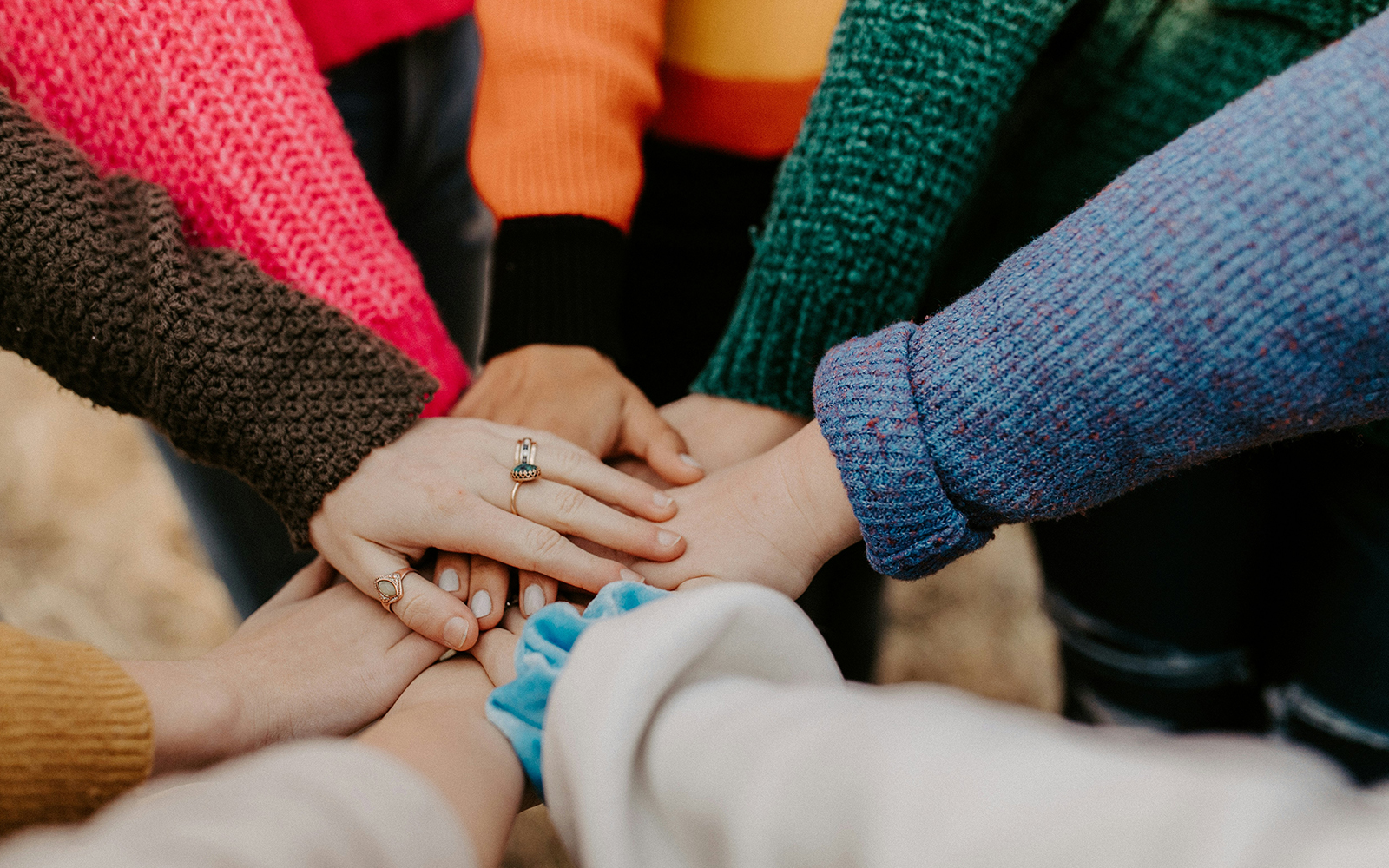
Clients who have no previous experience of working in groups may feel uneasy about joining a group. They may worry about exposure in the group, have had negative previous experience in groups, or feel they will get less individual time with the therapist in a group and not benefit as much from a group as they would in individual therapy.
*GROUP
Working in Groups

What is Group Therapy?
Group therapy involves a therapist working with several people at the same time, and can help treat a wide range of conditions. Group therapy allows people to receive support from others going through similar experiences to themselves. Therapy meetings may either be open (new participants can join at any time) or closed (participants can only join at the start and the group has a stable core of members). Hadithi Arts Therapies offers both open and closed groups, depending on the therapeutic focus of the group.
*WHY
Why work in Groups?
However, there are very real and tangible benefits to working in groups.
In his classic work, Theory and Practice of Group Psychotherapy, renowned existential psychotherapist Irvin Yalom identified 11 key therapeutic principles in group therapy.
1. Instillation of Hope.
Working towards change as a member of a group can really help you to feel optimistic about your own ability to change what can be changed. This is true of an open group where there will be other members of the group who have been in treatment longer than you, and you can see what they have achieved. But it is also true in a closed group, where progress in coping or recovery by others who started just where you are, and whom you can see are starting to make positive steps in their lives, can make you feel hopeful that recovery is not impossible, however tricky the challenges, and if they can do it, you can do it too.
Not everything in life can be changed, especially when it comes to the difficult people in our lives. Group therapy can be playful, supportive and encouraging and can also go a long way toward helping us to feel hopeful about our ability to cope with the things we cannot change by changing our reactions and our ability to deal with the challenges.
2. Universality
When you are facing a challenge in your life that is hurting you, you can feel terribly alone and as if you are the only person who has ever had to deal with anguish and loneliness. When you are part of a group learning to deal with a shared problem, you are no longer alone. Your problem becomes universal, in that it is shared by every other member of the group. The realisation that there are others who are willing to support you, who have had the same experiences and challenges as you, can leave you feeling much less isolated and be profoundly healing.
3. Imparting information
All the groups I run involve psychoeducation. Psychoeducation means a structured therapeutic approach which combines psychology and education to help you understand more about your presenting problem (the issue that has bought you to therapy), the symptoms of your problem and treatments for your problem. While I can give you these resources, group members can also be very helpful to each other with information from their personal stories about how they have dealt with difficulties and experienced success. Learning from each other in this lived experience way can be very educational and empowering.
3. Imparting information
All the groups I run involve psychoeducation. Psychoeducation means a structured therapeutic approach which combines psychology and education to help you understand more about your presenting problem (the issue that has bought you to therapy), the symptoms of your problem and treatments for your problem. While I can give you these resources, group members can also be very helpful to each other with information from their personal stories about how they have dealt with difficulties and experienced success. Learning from each other in this lived experience way can be very educational and empowering.
4. Altruism
Group members are able to share their strengths and help each other. The members come to recognise that not only despite what they have gone through, but because of what they have gone through, they have valuable experience to offer one another. Sharing experience is significant and beneficial to everyone in the group, but it can also boost self-esteem, confidence and a sense of purpose for the person who is sharing their experience.
5. Corrective Recapitulation of Primary Family Group
Many of us have learned unhelpful and damaging patterns in our family of origin, which we may have enacted throughout the rest of our lives. In some ways, the therapy group is much like a family, except this family is willing to be honest and supportive. Within the safe environment of the group, members can explore how their childhood experiences have contributed to their personality and behaviours. They can also learn how to avoid behaviours that are destructive in their lives and choose new and healthier ways of relating to others. The behavioural insights gained in the group can be transferred to life outside the group.
6. Development of Socialising Techniques
In real life when you make a social mistake, there are real life consequences like losing friends or feeling humiliated about one’s behaviour. In the safe and supportive setting of the group, members can experiment with practising new behaviours without the fear of failing and being judged. Groups are a great way of learning and practising social skills like tolerance, boundaries, empathy and conflict resolution. Learning new social skills can make members feel less isolated and more able to connect with others in meaningful ways. Over time, the social lessons learned in the group can be taken beyond the group and generalised to the wider world.
7. Imitative Behaviour
Working in a group can be a bit like having a pick ‘n mix display on offer at a sweet shop. There are a bunch of different personalities in the group as well as the therapist. You can observe all the interactions in the group, and you can work out which ways of relating to others feel helpful to you, and a more effective approach to confronting your problems and managing your relationships than the old, dysfunctional patterns that have bought you to therapy. And then you can test those changed behaviours within the group and get comfortable with them before you take them into the world outside the group.
8. Interpersonal Learning
In a group you can interact with the others and get feedback from the members and the therapist about your own behaviour. While this feedback might sometimes feel painful, the guidelines for the group make sure it is given in a supportive and respectful way. For many people going into group therapy, it is their first experience ever of being able to gain insight into their behaviour through safe and constructive feedback from a range of personalities. Learning about how others see their behaviour in this way, provides the opportunity for group members to learn about relationships, authenticity and intimacy, leading to a greater understanding of themselves and greater confidence in their ability to develop supportive, authentic interpersonal relationships in the world outside the group.
9. Group Cohesiveness
Each of the groups I run has a shared focus. This common goal unites the group, giving the members a sense of belonging, acceptance, trust and value. These nurturing and empowering feelings can create a sense of security for members, both within themselves and in relationship to the others in the group. Changing aspects of oneself and one’s behaviour in therapy can be challenging and painful. The feeling of being valued and held in the group can be the catalyst members need to take the scary risk of disclosing parts of themselves they usually conceal and want to change.
10. Catharsis
Sharing your feelings and experiences with a group of caring people is powerful. There may be wounds from your past that you have supressed for a long time but that nevertheless surface from time to time as intense and unmanageable emotions, leaving you frightened or ashamed. In the safety of the group, those intense suppressed feelings can be shared, but in a safe and understanding space where releasing your feelings leads to relief. Your pain, guilt or stress can lessen as a result, allowing you to make significant, internal shifts in your behaviour and your approach to life.
11. Existential Factors
We human beings are on a continual quest to live our lives in a meaningful way but when too many things go wrong, life can feel overwhelming and meaningless. Being part of a therapy group, means stepping outside yourself, accepting support, and supporting others as you share the frustrations and limitations of each other’s lives. The process can give you more of a birds-eye perspective on your own circumstances, understanding and accepting that the difficulties and challenges in your life are not in the way of your path but are in the fact the path itself. Being in a group can help you to accept life on its own terms, changing what you are able to change but accepting what you cannot change, without trying to escape, deny or fight the inescapable difficulties, or feeling paralysed by them. Group therapy can help members realise that they are responsible for their lives and their choices of action and behaviour, and that realisation can be very empowering.
*HOW
How do the Groups work?
In Hadithi Arts Therapies, we meet in groups of between 6 and 12 participants. These groups run once a week for two hours (for work based in London). I also run weekend-based workshops (12 hours over Saturday and Sunday) in the countryside in the UK, and retreat-based workshops (4 hours per day over 5 days) in South Africa.